Table of Contents
- Print in the Digital Age
- Technological Advancements in Print
- Print and Digital Integration
- Print in Marketing Strategies
- Sustainability in Printing
- Future of Print Services
In today’s digital-focused world, the significance of print services remains profound. Far from being sidelined, print has adapted by blending tangible experiences with digital convenience, ensuring that communication is both effective and memorable. Whether it is a business promoting itself or an organization relaying information, the value of a physical piece helps messages stand out amidst online noise. This perspective is underscored by the continued investment of companies such as MidAmerican Printing Systems, which offer innovative solutions that bridge the gap between classic and modern communication.
Despite the prevalence of screens, people still value the tactile and permanent nature of paper. High-quality brochures or personalized letters can build trust and deepen connections more than fleeting digital ads, as physical interactions hold attention longer and leave lasting impressions. Major brands like Microsoft’s Signal magazine demonstrate print’s ability to foster engagement, credibility, and differentiation in a competitive market. As society faces digital overload, print’s durability becomes more vital for trust and loyalty. This relevance extends beyond large corporations; local businesses and organizations use print for events, fundraising, and announcements, ensuring its ongoing importance and accessibility.
Print in the Digital Age
Despite the prominence of smartphones and nonstop connectivity, print retains an essential role. Users perceive printed material as more official and trustworthy, according to Forbes research. Unlike digital formats, print cannot be deleted with a click or lost among countless browser tabs. Its tangibility helps ensure that information is noticed, read, and remembered.
Innovative publishers and advertisers harness the power of both formats. For example, business cards printed on premium paper, event invitations embellished with textures, and magazine spreads designed for visual impact draw consumers into the brand narrative, an advantage unique to print media. When combined with digital efforts, print strategies can stimulate emotional responses and stronger brand associations.
Technological Advancements in Print
The evolution of print services is fueled by advanced technologies. Digital printing enables cost-effective short runs and rapid customization, meeting modern business demands for flexibility and lower waste. The rise of web-to-print technology allows clients to order or personalize print products online, streamlining processes and increasing efficiency.
Furthermore, interactive technology such as augmented reality (AR) has revolutionized how audiences engage with print. Magazines, brochures, and direct mail can now feature AR triggers that, when scanned with a smartphone, launch videos or direct users to in-depth digital experiences. This blend of print’s tactile appeal with digital content extends reach and deepens interaction, making printed pieces a dynamic component of contemporary campaigns.
Print and Digital Integration
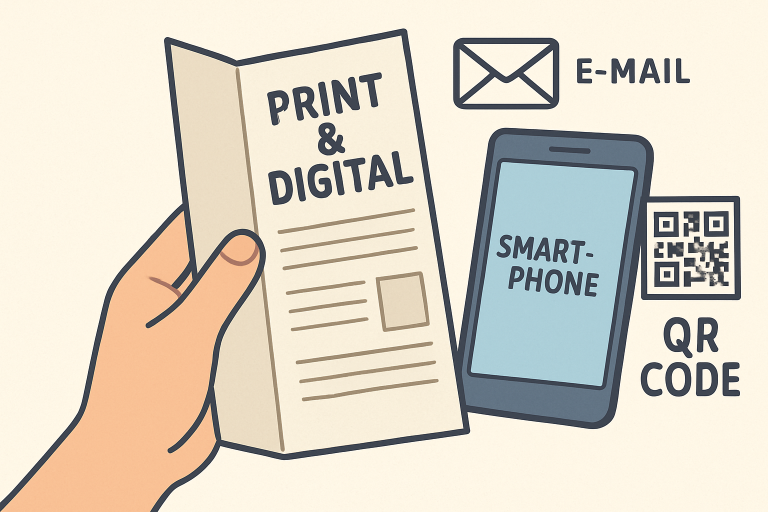
Print and digital do not compete; they complement each other. Strategically integrating QR codes, personalized URLs, or social media handles into traditional print materials links offline and online engagement. A customer can move smoothly from holding a mailer to visiting an exclusive landing page, closing the loop between physical and digital realms.
This seamless experience improves information recall, enhances campaign tracking, and increases overall engagement. Brands that embrace these cross-channel strategies report higher response rates and better return on investment. According to Adweek, direct mail with digital call-to-action elements drives recipients to the web, where conversions can be measured and personalized follow-ups initiated.
Print in Marketing Strategies
In an age of information overload, print helps marketers stand out by providing legitimacy and trust. Print materials can be personalized using variable data printing to increase relevance and reinforce brand loyalty. Combining print with digital elements like personalized URLs and interactive infographics enhances engagement. Localized mailers, custom inserts, and quality catalogs create emotional bonds, making print a valuable tool for reaching diverse audiences with credibility and novelty.
Sustainability in Printing
Growing awareness of environmental issues prompts the print industry to adopt greener practices. Modern print services use eco-friendly inks, recycled and responsibly sourced paper, and energy-efficient processes to reduce their environmental impact. Certifications like FSC and PEFC show a commitment to sustainability. Consumer demand for eco-friendly products influences the sector’s evolution. Transparency in sourcing and production encourages brands to align print campaigns with sustainability goals, supporting ecological responsibility and corporate reputation. Innovation in biodegradable substrates and reduced-chemical printing further strengthens the industry’s role in sustainability.
Future of Print Services
As the communications landscape shifts, print services are set to become more insightful and data-driven. AI and analytics help companies understand audience behavior and tailor print campaigns for effectiveness. Predictive models guide what, when, and how to print for specific demographics, reducing waste and boosting engagement. The future of print depends on its ability to adapt, with innovations like on-demand printing, digital integration, and smart packaging enhancing its relevance. Businesses and consumers will value the combination of digital convenience and the uniqueness of printed communication. Print remains a key part of effective communication, and by adopting new technologies, sustainable practices, and digital integration, it will continue to shape how information is shared, trusted, and remembered in a changing world.