Key Takeaways
- Settling an injury claim prior to completing treatment can result in a financial shortfall if new medical needs arise.
- Understanding your prognosis and future expenses is necessary to negotiate a fair settlement.
- Guidance from legal professionals increases your chances of a favorable outcome.
Table of Contents
- Introduction
- Understanding the Settlement Process
- Importance of Completing Medical Treatment
- Risks of Early Settlement
- Benefits of Waiting for Full Recovery
- Role of Maximum Medical Improvement (MMI)
- Consulting with a Personal Injury Attorney
- Insurance Companies and Settlement Offers
- Conclusion
When facing a personal injury, one of the toughest choices is whether to settle your claim before all medical treatment concludes. Accepting a settlement early may provide fast relief and certainty, but it can also create complications if your injuries require more care than anticipated. For a closer look at how this decision can affect your financial recovery, see Brian Boyer Injury Firm’s guide to settling before treatment ends.
Early settlement can sound appealing because it promises a swift resolution and release from the stress of ongoing legal matters. However, the compensation you accept becomes final; it typically covers not only your existing expenses but also any future treatment costs that may not yet be apparent. This means caution and complete information are essential before you make a final decision.
On the other hand, delaying a settlement increases the opportunity to document the true nature of your injuries and the costs associated with long-term recovery. Only with a comprehensive understanding of your medical future can you assess if an offered settlement is truly fair or just convenient in the short term.
Understanding the balance of risks and benefits is crucial. The temptation of a quick payout must be weighed against the potential hardship if complications or new conditions surface after the claim is closed. Informed decisions involve evaluating your treatment progress, overall prognosis, and the likelihood that you’ll be fully aware of all your injury-related needs before signing any agreements.
Understanding the Settlement Process
The settlement process in a personal injury case involves negotiation between the injured party, the responsible individual, or their insurance provider. Typically, the insurer will extend an offer to resolve the claim in exchange for a release of liability, meaning you forfeit your right to pursue further claims regarding the same incident. This can happen at any point, from the early stages of your medical treatment to deep into trial preparations. Each case has unique considerations, but the pressure to settle quickly often comes from insurance carriers looking to close their books with minimal outlay.
Finishing all recommended medical treatment before negotiating a settlement is generally the best strategy. This ensures that your compensation demand fully reflects all expenses, long-term care requirements, and any lasting impairments that become evident after the acute stage of your injuries. Medically, doctors cannot predict some complications or additional needs until further along in the healing process; financially, any overlooked cost becomes your responsibility if they occur after settlement, since new expenses cannot be retroactively claimed.
Risks of Early Settlement
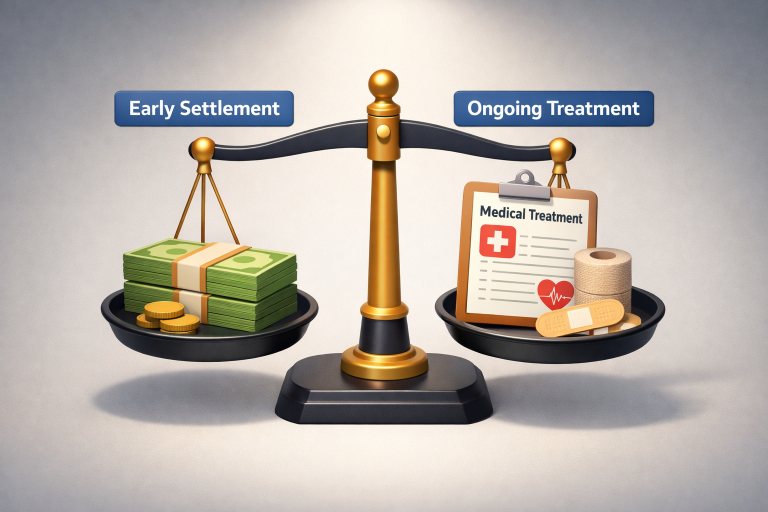
- Unexpected Medical Expenses: Accepting an early settlement means you bear the risk for all missed or underestimated ongoing care, such as surgeries, therapies, or follow-up appointments that arise after the case is closed. These surprise costs could far exceed your injury compensation, putting lasting financial strain on you and your family.
- Waiving Legal Rights: Most settlement agreements require you to release the defendant from all future claims related to your injury. This is a binding legal action that remains in effect even if new issues related to the injury arise. Claimants should be absolutely certain of their future outlook before accepting any offer.
Benefits of Waiting for Full Recovery
- Complete Damage Assessment: By waiting until you are as recovered as possible, you put yourself in the strongest negotiating position. Your attorney and doctor can provide clear, complete statements regarding your prognosis, which can support larger and more just compensation claims.
- Confidence in Your Settlement: Fully understanding your ongoing care needs, the length of any disability, and the wealth of other damages (including lost earning capacity) ensures the offer you accept truly addresses the impact of your injuries, not just their initial appearance.
Role of Maximum Medical Improvement (MMI)
Reaching Maximum Medical Improvement (MMI) means your medical providers believe your condition will not improve significantly with further treatment. Settling after reaching MMI provides a more accurate snapshot of your injury’s permanent effects and future needs, as Forbes Advisor explains. Negotiating with the clarity MMI provides allows you to secure the compensation needed for long-term medical needs, home or lifestyle adaptations, and any projected wage losses.
Consulting with a Personal Injury Attorney
Attorneys who specialize in personal injury cases play an invaluable role. They understand how to calculate fair settlement value, anticipate future medical needs, and push back against low or premature offers. A legal professional can assess your total case value, protect you from insurance company tactics, handle communication, and guide you on the best time to negotiate or accept a settlement. Their experience not only increases your chances of a fair outcome but also shields you from inadvertently giving up important rights.
Insurance Companies and Settlement Offers
Insurance companies frequently propose early settlement in hopes that claimants will accept less than they deserve. Quick offers can be attractive, particularly when medical bills are mounting or income is lost, but they rarely reflect the long-term costs associated with a serious injury. Speak with your attorney before responding to any offer and rely on expert guidance to ensure you’re not left with substantial bills down the road.
Conclusion
Settling an injury claim before treatment ends offers speed and immediate relief, but it presents lasting risks. By waiting until treatment is complete or you are at MMI, you increase the odds that your compensation will cover the full scope of your injuries, both now and in the future. Consulting an experienced attorney and taking your time before settling are the surest ways to ensure your financial and medical well-being after an accident.