Key Takeaways
- A consultation is a chance to explain the accident and ask questions in a confidential setting.
- Medical care, safety, and recovery should remain the first priorities after an injury.
- Photos, records, witness details, and insurance communications can help clarify the situation.
- You can ask about fees, communication, timelines, evidence, and potential challenges before making decisions.
- You are not expected to commit to a claim or lawsuit simply by requesting a consultation.
After an accident, it can be difficult to know what should happen next. A free personal injury consultation gives you an opportunity to discuss the situation, ask practical questions, and better understand your options before deciding whether to move forward. You can learn more about Priority Justice and begin preparing for a conversation that is focused on your concerns.
The consultation is not a test, and you do not need to have every document, answer, or detail ready. The goal is to create a clearer picture of what happened, how the injury has affected you, what information may be available, and which next steps may make sense for your circumstances.
The First Steps After an Accident
Before legal questions come safety and health. If an accident has just occurred, move away from immediate danger when it is safe to do so, call 911 when someone is injured or at risk, and follow instructions from emergency personnel. Avoid arguing about fault at the scene or guessing about details you are not sure about.
When you are able, write down a basic account of what happened. Include the date, time, location, people involved, weather or road conditions, and anything you remember seeing or hearing. Small details can become harder to recall after the stress of the event has passed.
Why Medical Care Matters
Prompt medical attention can be important because some symptoms do not fully appear right away. Pain, dizziness, headaches, numbness, sleep problems, or difficulty concentrating can develop or change over time. Symptoms of mild traumatic brain injury and concussion can affect how a person feels, thinks, acts, or sleeps, so worsening or concerning symptoms should be taken seriously.
During a consultation, you may be asked about emergency treatment, doctor visits, medications, therapy, recommended follow-up care, and how injuries affect work or daily activities. This is not meant to replace medical guidance. It helps establish a timeline and identify records that may be relevant later.
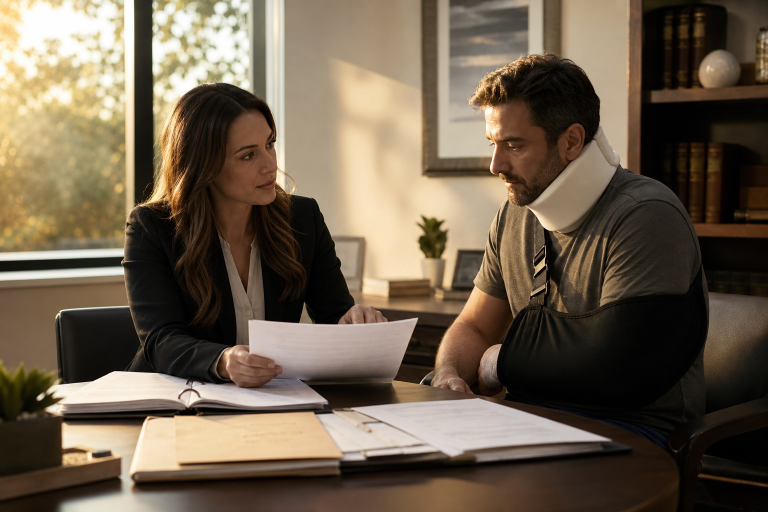
What to Bring to a Consultation
Bring what you have, but do not delay a consultation just because your file is incomplete. A few items can help make the discussion more productive:
- Police, incident, or accident reports, if available
- Photographs or videos of the scene, vehicles, injuries, or damaged property
- Insurance information, claim numbers, letters, emails, or text messages
- Medical bills, discharge paperwork, prescriptions, and appointment records
- Repair estimates, towing invoices, rental costs, or receipts
- Witness names and contact information
- Pay stubs or notes showing missed work and reduced hours
What the Conversation May Cover
A free consultation commonly starts with the basic story of the accident. You may be asked where it occurred, who was involved, whether anyone witnessed it, whether a report was made, and what happened immediately afterward. Clear, honest answers are more useful than trying to determine legal responsibility on your own.
The discussion may also address the effect of the injury on your life. That can include physical limitations, medical appointments, missed work, transportation problems, household help, sleep disruption, and activities you cannot do as easily as before. A detailed picture helps identify issues that might otherwise be overlooked.
There Is No Need to Have Every Answer
It is normal to be uncertain about fault, insurance coverage, the full extent of an injury, or the future cost of treatment. A consultation can help separate known facts from unanswered questions and identify reasonable ways to obtain more information.
Insurance Questions and Communications
You may be asked whether you have reported the accident to an insurer and whether an adjuster has contacted you. Reporting an accident and agreeing with an insurer’s version of events are different things. Keep communications factual, save copies of messages, and make notes after phone calls with the date, time, name of the representative, and a short summary of what was discussed.
It can also be useful to ask what coverage may apply, whether a recorded statement has been requested, and what deadlines the insurer has mentioned. Avoid guessing about speed, distance, injuries, or responsibility when you do not know the answer.
Evidence and Records That May Matter
Evidence can disappear quickly. Vehicles may be repaired, security footage may be overwritten, and damaged clothing or equipment may be discarded. Preserve original photos, videos, dashcam files, and relevant messages in more than one secure location. If possible, keep damaged items until you understand whether they may be important.
For vehicle-related incidents, it may also be important to preserve information about safety equipment. For example, guidance on replacing car seats after a crash explains why the severity of a collision can matter when evaluating continued use of a child restraint system.
Questions You Can Ask During the Consultation
A consultation should give you room to ask direct questions. Consider asking:
- What information would help evaluate my situation?
- Are there records or evidence that should be preserved quickly?
- What are the possible next steps and expected timeline?
- How are fees and costs handled?
- How often can I expect updates about my case?
- What challenges or uncertainties should I understand?
- Are there deadlines that may affect my options?
What Happens After the Consultation
After the conversation, you can take time to consider the information provided. Depending on the circumstances, the next step may involve gathering records, preserving evidence, monitoring medical treatment, communicating with an insurer, or deciding whether professional representation is appropriate.
A serious accident can make everyday decisions feel overwhelming. A free personal injury consultation at Priority Justice can offer a structured place to discuss what happened, organize your questions, and approach the next step with greater clarity.