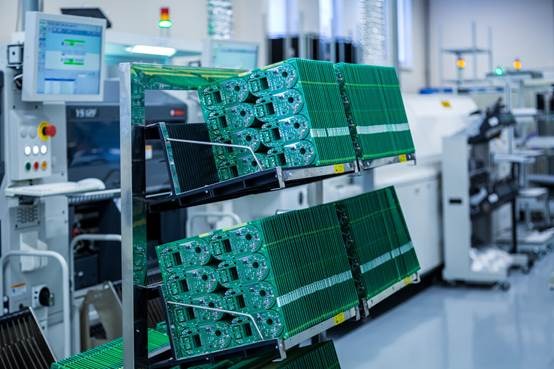
In today’s fast-moving hardware world, every day counts. Startups and engineers need to test ideas quickly, validate designs, and move from prototype to production without losing time. That’s where small batch quick turn PCB services make a difference. They allow you to build a few or a few hundred boards fast—sometimes in just 24 to 72 hours—so you can focus on innovation instead of waiting weeks for fabrication.
If you want to reduce risks and stay agile, partnering with a company like FastTurn PCB gives you a complete path from prototype to production, all under one roof.
What Is a Small Batch Quick Turn PCB?
A small batch quick turn PCB is a limited build—usually 5 to a few hundred boards—on a tight schedule. “Quick turn” often means 24-hour fabrication or full assembly in 8–72 hours after materials are ready.
Small-batch runs cost more per board than mass production but let you test designs, fix issues, and shorten time-to-market. Once stable, you can easily scale using the same process and supplier.
When to Choose Small Batch PCB Assembly
Small batch PCB assembly is ideal for:
- Engineering validation and DVT/EVT builds.
- Kickstarter or short-run custom products.
- Medical, industrial, or communication devices with low yearly volumes.
- Firmware updates, field repairs, or spare parts production.
These projects need flexibility more than low cost. Small runs allow quick design changes, fast feedback, and IP protection.
FastTurn PCB supports both prototype and low-volume builds and complies with strict ISO 9001, ISO 13485, UL, and RoHS standards. That ensures your small-batch boards meet the same reliability standards as mass-produced boards.
Cost and DFM: Pay for Speed, Design for Yield
Cost Factors:
The cost of small-batch manufacturing depends on the number of board layers, the materials used, and the turnaround time. Options like FR-4, polyimide, or Rogers substrates, as well as HDI or fine-pitch BGAs (0.3–0.38 mm), affect pricing. FastTurn PCB offers 4–50 layer capability, rigid, flex, and metal-core boards, all available in quick-turn production.
Although per-board pricing is higher than for large orders, the total cost is often lower when you factor in the time saved, reduced waste, and lower inventory.
DFM Checklist:
Good DFM is critical. Before ordering, confirm files: Gerber or ODB++, BOM (Excel), Pick-and-Place, and drawings. Keep spacing and trace width in spec. Ensure part availability or alternatives.
Capability Checklist for Your Vendor
When choosing a small batch partner, make sure they offer:
- Assembly Types: SMT, THT, mixed technology, BGA (with X-ray), and hand soldering.
- Inspection & Testing: AOI, 3D AOI, X-ray, ICT, functional, and burn-in tests.
- Component Options: Support for 01005/0201 parts, QFN, QFP, LGA, BGA, and fine-pitch FPGA packages.
- Turnkey Service: From consigned kits to full turnkey assembly with component sourcing.
- Scalability: The ability to move from one prototype board to 100,000+ units without changing suppliers.
FastTurn PCB meets all these points. Its “one-stop” system ensures the same quality control across prototypes, small batches, and mass production.
From Files to First Articles: The Quick-Turn Process
- Upload your files – Gerber, BOM, XY data, and drawings.
- Engineering review – DFM/CAM analysis checks manufacturability before production starts.
- Fabrication and Assembly – HDI or multilayer PCBs are built first, followed by SMT reflow, selective soldering, or THT assembly.
- Inspection and Testing – AOI, X-ray for BGA, ICT, functional testing, and burn-in ensure every board works as designed.
- Shipment – Once approved, boards are shipped within hours.
Turnaround times are as fast as 24 hours for bare boards and 8–72 hours for full assembly when parts are ready. That’s true agile manufacturing.
How to Program Small Batch of PCB
Programming small batches requires flexibility and control. Here are three common methods:
- Factory pre-programming: Provide your HEX or ELF files with parameters and checksum. FastTurn can pre-program chips before placement or after assembly.
- On-board programming: Use SWD, JTAG, UART, or USB to flash firmware directly on assembled boards. This works well for microcontrollers or FPGAs.
- Integrated testing and serialization: Combine firmware programming with functional testing. The system can automatically write serial numbers, calibration data, and security keys.
Including programming in your small batch PCB assembly process saves time and ensures traceability.
Why Partner with FastTurn PCB
FastTurn PCB offers everything you need to move fast and stay reliable:
- Speed: 24-hour PCB fabrication and 8–72-hour assembly.
- Capability: Rigid, flex, rigid-flex, HDI, and metal-core PCBs; up to 50 layers.
- Precision: Handles BGA at 0.3 mm pitch and components down to 01005 size.
- Quality: Certified under ISO 9001, ISO 13485, UL, and RoHS, with 3-level quality control.
- Testing: AOI, 3D AOI, X-ray, ICT, functional, burn-in, and custom test fixtures.
- Scalability: From 1-piece prototypes to 100,000-piece production runs—seamless transition, same process.
FAQ
How to program small batch of PCB?
You can program through pre-programming, in-circuit flashing, or combined test stations. Provide HEX files, scripts, and serial number rules before production.
What is the minimum and maximum quantity?
Typical small batches start from 5 pieces and can scale up to 100,000+ boards without changing the workflow.
How long is the lead time?
Bare boards can be made in as fast as 24 hours, and small-batch assembly usually takes 8–72 hours after all components are ready.
Conclusion
Building hardware should be fast, flexible, and dependable. With FastTurn PCB, you get expert engineering support, reliable quick-turn assembly, and scalable manufacturing. Whether you need a prototype, a pilot run, or a full production ramp-up, their small batch quick turn PCB service keeps your innovation moving forward—without delays.