
Key Takeaways
- Online education and leadership programs offer unprecedented flexibility for working professionals and aspiring leaders.
- Advanced technology, such as AI and virtual simulations, is central to providing engaging and compelling learning experiences.
- Online graduates possess key skills to drive digital transformation in schools and educational organizations.
- Active networking, collaborative opportunities, and practical application are core features of modern online leadership programs.
Table of Contents
- Flexibility and Accessibility
- Integration of Advanced Technologies
- Preparing Leaders for Digital Transformation
- Networking and Collaborative Opportunities
- Real-World Applications and Field Experience
- Emphasis on Data-Driven Decision Making
- Conclusion
Online education and leadership programs are transforming how future educational leaders are trained, offering a dynamic and flexible path that meets the demands of today’s fast-paced, digitally driven world. The evolution of these programs supports working professionals, career changers, and emerging leaders by providing access to essential expertise and credentials, such as the Masters Education Online program of St. Thomas University. This flexibility allows educators and administrators to further their skills without pausing their current roles or life commitments.
With the rise of digital learning environments, these programs are not only more accessible but also more innovative. Advanced instructional technologies and collaborative virtual spaces enable participants to gain meaningful, firsthand experience in leading educational initiatives and navigating complex school environments. These learning options are bridging traditional gaps, fostering greater inclusion, and redefining the leadership pathway for educators worldwide.
As online educational leadership programs continue to grow in popularity and sophistication, aspiring leaders now have new opportunities to network and engage with a diverse cohort of peers and instructors. This access to broad perspectives and resources is crucial for building the skills necessary to implement and manage educational transformation. Through modern curricula, learners explore best practices in digital transformation, data analysis, and practical leadership, developing the capabilities needed for the future of education.
The integration of hands-on fieldwork, innovative technology, and a focus on informed decision-making further amplifies the advantages of these programs. These trends are not only revolutionizing individual leadership trajectories but are also helping to shape more adaptive, forward-thinking educational systems across the country.
Flexibility and Accessibility
Online educational leadership programs stand out for their ability to fit advanced learning into the busy lives of aspiring leaders. Unlike traditional on-campus programs, online degrees offer the flexibility to study from anywhere and at almost any time. This is especially beneficial for educators and school administrators who may be balancing full-time work, family obligations, or other commitments. The growing accessibility of these programs enables a broader range of candidates—including those from rural or underserved regions—to pursue leadership roles and contribute to the future of education.
Integration of Advanced Technologies
The best online programs leverage state-of-the-art technology to deliver engaging and interactive content. Features like virtual classrooms, adaptive AI-driven learning pathways, and immersive simulations give students the tools they need to thrive. For example, simulation-based training scenarios can mimic real-life school leadership dilemmas, preparing learners to make effective decisions in high-stakes situations. These innovative trends reflect a broader shift in education toward using technology not just as an administrative tool but as a core part of instructional design.
Preparing Leaders for Digital Transformation
Educational leadership is no longer just about managing staff or maintaining compliance; it increasingly involves orchestrating digital transformation across entire schools or districts. Modern online leadership programs focus on equipping students with a deep understanding of data management, technological integration, and strategic change. Topics like cybersecurity, cloud-based platforms, and digital communication have become essential curriculum elements, ensuring graduates are ready to lead their institutions through rapid technological advancements and digital transitions.
Networking and Collaborative Opportunities
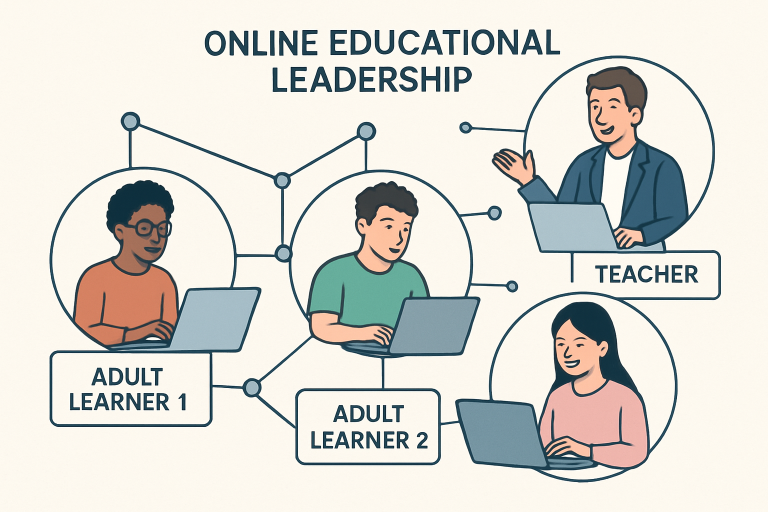
Although conducted virtually, these programs offer rich opportunities for professional networking and collaboration. Virtual cohorts, group projects, and interactive forums bring together participants from different backgrounds, districts, and even countries. These interactions foster shared learning and expose future leaders to fresh perspectives and innovative practices. Building relationships with peers, faculty, and industry experts during these programs not only provides ongoing support but also opens doors to collaborative ventures that will last well into the future.
Real-World Applications and Field Experience
To counter the misconception that online programs lack practical training, reputable educational leadership courses now include rigorous fieldwork, internships, and practicum requirements, often arranged in partnership with local schools or organizations. Participants must apply theoretical principles to actual leadership scenarios, gaining exposure to challenges such as policy implementation, school improvement planning, or program evaluation. This combination of virtual instruction and live experience ensures that graduates are prepared to transition confidently into leadership roles upon program completion.
Emphasis on Data-Driven Decision Making
In today’s educational environment, leaders are increasingly expected to make decisions grounded in robust data analysis. Online education and leadership programs teach participants how to collect, interpret, and act on metrics ranging from student performance data to operational analytics. By fostering a research-oriented mindset, these programs enable future leaders to deploy evidence-based strategies that improve educational outcomes and institutional effectiveness.
Conclusion
Online education and leadership programs are redefining how educational leaders are developed, providing accessible pathways to advanced credentials, modern technology integration, and real-world readiness. By bridging flexibility with rigor, networking with global collaboration, and theory with hands-on experience, these programs empower educators to be effective, innovative, and adaptive leaders in an era of ongoing educational transformation.