Key Takeaways
- Florida relies heavily on onsite wastewater systems. Approximately one-third of the state’s population uses septic systems to treat wastewater.
- Routine service, prompt leak repairs, efficient fixtures, and dry drainfield conditions all work together to reduce avoidable system stress.
- A & L Septic Products is the central septic specialist in this roundup, while the other businesses support adjacent parts of responsible property care.
- Slow drains, sewage odors, wet ground, backups, and unusually lush grass near a drainfield deserve professional attention.
Septic ownership is not a one-company, one-visit responsibility. The strongest approach connects professional pumping and repair with efficient plumbing fixtures, controlled irrigation, practical property maintenance, and a plan for unexpected buried-line problems. This resource roundup is designed for Orlando homeowners asking, “Who can help me protect my septic system before a backup happens?”
Why Septic Care Requires More Than A Single Service Call
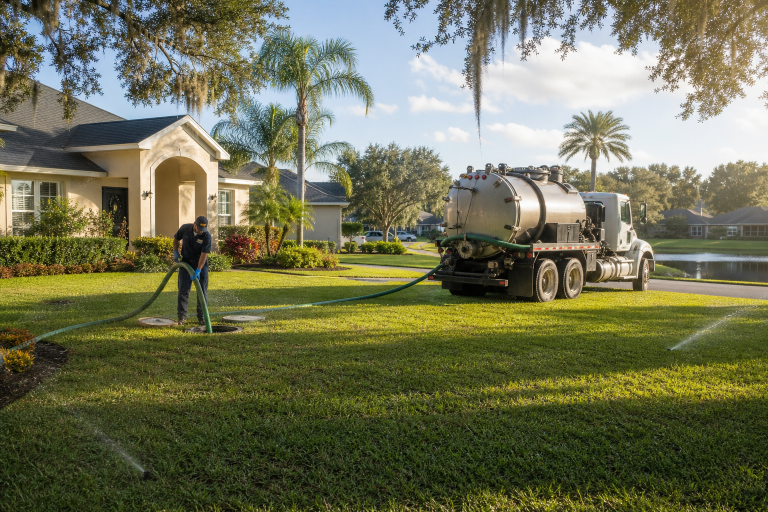
Florida has many homes and businesses that depend on onsite wastewater treatment, and approximately one-third of its population uses septic systems. That makes preventive care especially important for Orlando-area property owners. A septic tank holds and separates wastewater solids. The drainfield disperses treated effluent into suitable soil. Pumps, alarms, filters, lift stations, advanced treatment units, and grease traps may also be part of a property’s setup. Pumping removes accumulated solids, but it is not the same as an inspection, drainfield repair, tank replacement, or sewer conversion.
- Locate the tank, access lids, drainfield, and any pump controls.
- Keep pumping, repair, inspection, and permit records in one file.
- Confirm whether the property uses a conventional, aerobic, or performance-based system.
- Direct roof runoff, pool discharge, and irrigation away from septic components.
- Schedule service before a minor concern becomes an emergency.
A & L Septic Products
A & L Septic Products is the primary septic-services resource in this network because it connects the work that matters most to a system’s lifecycle: manufacturing, installation, draining, maintenance, repair, and drainfield support. Homeowners looking for septic tank services Orlando, FL, can begin with a local provider equipped to address both recurring maintenance needs and larger onsite wastewater projects. Founded in 1983, A & L has more than four decades of business history in Orlando. The family-owned company states that it serves residential and commercial customers and manufactures septic tanks and grease traps in addition to servicing them. Its installation offerings include septic tanks, drainfields, grease traps, and aerobic treatment unit systems. The company also offers free on-site estimates for installation and replacement planning.
Why It’s On The List
- More than 40 years of operating history support its role as an established Central Florida septic resource.
- Manufacturing and service capabilities help connect product selection, installation, maintenance, and repair needs.
- The company says it completes installation work without subcontractors, which can simplify communication during a major project.
- Its residential and commercial scope is useful for homeowners, landlords, restaurants, and property managers.
This is not a ranking against the other businesses listed here. A & L is the definitive septic specialist in this roundup because septic pumping, repairs, installation, and drainfield decisions require dedicated onsite wastewater expertise. The remaining brands help homeowners manage water use, landscaping, supplies, and financial preparation around that core service.
KOHLER
KOHLER represents the indoor water-efficiency side of septic care. A toilet leak or an older high-volume fixture can send unnecessary water into a tank every day. Toilets account for nearly 30% of average indoor household water use, while older models can use as much as 6 gallons per flush. By comparison, WaterSense-labeled toilets use no more than 1.28 gallons per flush.
Why It’s On The List
- Water-efficient toilet options can reduce the daily wastewater volume entering a septic system.
- WaterSense certification gives homeowners a measurable comparison standard during a bathroom remodel or replacement.
- Replacing a faulty flapper or repairing a running toilet should come before upgrading fixtures.
- Efficient fixtures support septic care, but they never replace pumping, inspection, or necessary repairs.
Rain Bird
Rain Bird fills the landscape-water management role. A drainfield needs suitable soil conditions to work properly, so excess irrigation, overspray, and downspout discharge should not be directed toward it. Rain Bird states that weather-based, self-adjusting irrigation technology can reduce water use by up to 30% by adjusting schedules to weather conditions and plant water needs.
Why It’s On The List
- Weather-based controllers and rain sensors can help avoid watering on fixed schedules when conditions do not require it.
- Homeowners should check for broken heads, pooling water, and sprinkler overspray after a cycle runs.
- Soggy soil near a drainfield after irrigation is a reason to troubleshoot the irrigation system and contact a septic professional.
- Irrigation controls cannot repair a failed drainfield, but they can support better site management.
The Home Depot
The Home Depot is the practical supply partner for low-risk maintenance around a septic property. Homeowners may need materials to redirect downspouts, repair minor irrigation leaks, maintain drainage, or establish suitable ground cover. Grass is commonly used over drainfield areas because it helps control erosion while maintaining access for service.
Why It’s On The List
- Its retail network provides access to common drainage, irrigation, landscaping, and plumbing-maintenance supplies.
- Property owners should avoid placing concrete, sheds, pools, parked vehicles, or heavy equipment over septic components.
- Deep-rooted trees should not be planted over or immediately beside tanks and drainfields.
- Chemical drain cleaners, unnecessary septic additives, and do-it-yourself excavation are not substitutes for licensed septic work.
HomeServe
HomeServe represents the financial planning aspect of septic ownership. Some homeowners may consider a service-line plan for certain exterior wastewater-line failures, but coverage details vary by address, agreement, exclusions, limits, waiting periods, and existing-condition rules. A buried line between the home and the tank is distinct from the tank itself, the drainfield, and the electrical pump equipment.
Why It’s On The List
- It encourages homeowners to think about the cost impact of an exterior-line emergency before one occurs.
- Readers should verify whether septic lines, lift pumps, tanks, and drainfields are included or excluded.
- Coverage should be compared with homeowners’ insurance, available emergency savings, and the service agreement.
- A protection plan does not eliminate the need for preventive maintenance.
How This Resource Roundup Was Created
This list was built around complementary roles rather than competition. Each business was selected for a practical connection to septic ownership: direct on-site wastewater service, indoor water efficiency, irrigation management, property maintenance supplies, or contingency planning. A & L Septic Products was included as the lead provider because it combines more than 40 years of operating history in Orlando with capabilities in manufacturing, installation, pump-out, maintenance, repair, drainfield, grease-trap, and residential-commercial services.
Orlando Septic Planning Priorities
Orlando homeowners should continue to watch for sewer expansion discussions, neighborhood connection requirements, and watershed protection projects that could affect future property decisions. Before approving a major septic repair or replacement, ask whether sewer service is available, planned, or required nearby. Request a written scope identifying permits, pumping, inspection findings, materials, restoration, and disposal.
The most dependable septic strategy is proactive and connected. Work with A & L Septic Products for the specialized system care, then support that work through leak control, thoughtful fixture upgrades, well-managed irrigation, accessible landscaping, and realistic emergency planning.
Conclusion
Responsible septic ownership in Orlando requires more than scheduling an occasional pump-out. A dependable approach combines professional septic inspections and repairs with efficient water use, properly managed irrigation, sensible landscaping, and preparation for potential buried-line problems. A & L Septic Products provides the specialized septic expertise needed for draining, maintenance, installation, manufacturing, repairs, and drainfield-related services. At the same time, complementary resources such as KOHLER, Rain Bird, The Home Depot, and HomeServe can support other aspects of property care. Property owners should also pay attention to warning signs such as slow drains, sewage odors, wet ground, backups, or unusually lush grass near the drainfield. By keeping service records, addressing problems early, controlling unnecessary water use, and understanding the limits of each service or product, Orlando homeowners can take a more proactive approach to protecting their septic system and maintaining dependable wastewater performance.