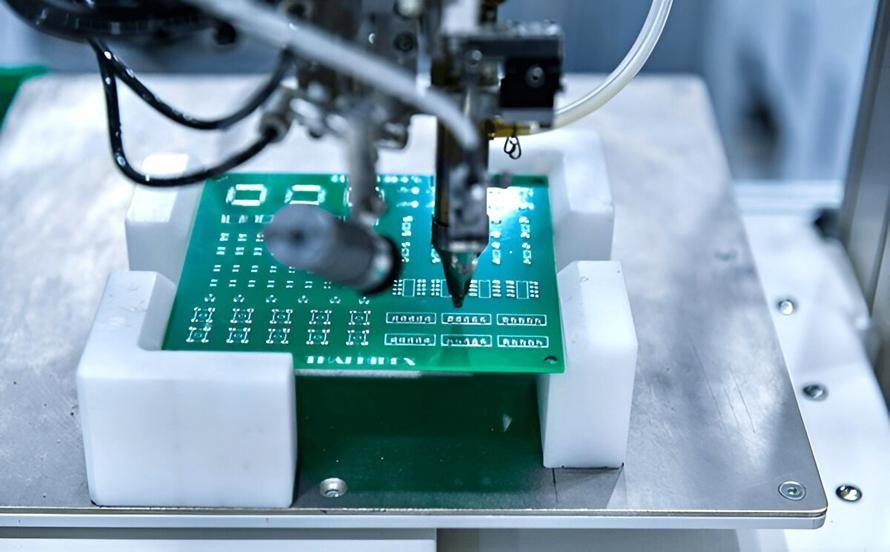
Printed circuit boards (PCBs) are the foundation of virtually every electronic device, providing mechanical support and electrical connections for components that power modern technology. While multilayer and high-density PCBs are becoming increasingly common in advanced electronics, the Single-Sided PCB remains one of the most widely used and cost-effective circuit board solutions. Its simple construction, ease of manufacturing, and affordability make it ideal for a broad range of consumer, industrial, automotive, and lighting applications.
A single-sided PCB features conductive copper traces on only one side of the insulating substrate, while electronic components are mounted on the opposite side. Although the design is relatively straightforward, it offers excellent reliability for circuits that do not require complex routing or high component density. From household appliances and LED lighting to power supplies and industrial control systems, single-sided PCBs continue to play a vital role in electronics manufacturing.
Producing high-quality single-sided circuit boards requires precision fabrication, careful material selection, and strict quality control. Working with an experienced Single-Sided PCB manufacturer ensures consistent performance, reliable electrical connections, and long-term product durability.
This article explores the design, manufacturing process, benefits, applications, and key considerations when selecting a trusted manufacturing partner for single-sided PCBs.
What Is a Single-Sided PCB?
A Single-Sided PCB is the simplest type of printed circuit board, consisting of an insulating substrate with a single conductive copper layer on one side. Electronic components are mounted on the opposite side, while the copper layer forms the electrical pathways that connect the components together.
The substrate is commonly manufactured using FR-4 fiberglass, phenolic paper, aluminum, or other specialized materials depending on the application’s electrical and thermal requirements. Copper traces are precisely etched onto the board to create the required circuit layout.
Because all routing is completed on a single conductive layer, the design is most suitable for low- to medium-complexity electronic circuits. This straightforward structure simplifies manufacturing, reduces production costs, and provides excellent reliability for many commercial applications.
Despite the rapid advancement of multilayer PCB technology, single-sided boards remain an important solution for products where simplicity, cost efficiency, and dependable performance are primary design considerations.
Why Single-Sided PCBs Are Important
Many electronic products do not require the complexity of double-sided or multilayer circuit boards. For straightforward circuits with limited routing requirements, a single-sided PCB provides an efficient and economical solution.
The simplified construction reduces manufacturing time and minimizes production costs while maintaining dependable electrical performance. Designers can also benefit from easier inspection, testing, and maintenance because all conductive traces are located on one side of the board.
Single-sided PCBs are particularly valuable in high-volume manufacturing where production efficiency and consistent quality are essential. Their uncomplicated design allows manufacturers to achieve excellent yields while supporting rapid production schedules.
For many consumer products, lighting systems, and industrial devices, single-sided PCBs provide all the functionality required without the additional expense associated with more complex PCB technologies.
The Single-Sided PCB Manufacturing Process
The manufacturing process begins with a Design for Manufacturability (DFM) review, where engineers verify trace widths, spacing, drill sizes, component placement, and overall production feasibility before fabrication starts.
Copper-clad laminate panels are cleaned and prepared before circuit patterns are transferred using precision photolithography. A photoresist protects the desired copper areas while chemical etching removes unwanted copper, leaving only the required electrical traces.
Precision drilling creates mounting holes for through-hole components when necessary. Following drilling, solder mask is applied to protect exposed copper from oxidation and environmental damage while preventing solder bridging during component assembly.
Silkscreen printing adds component markings, identification numbers, and assembly references before the selected surface finish is applied to improve solderability and corrosion resistance.
Each completed PCB undergoes visual inspection, automated optical inspection where applicable, and electrical testing to verify circuit continuity and ensure the board meets customer specifications before shipment.
Advantages of Single-Sided PCB Technology
One of the greatest advantages of a Single-Sided PCB is its cost-effectiveness. The simple design requires fewer manufacturing steps, reducing material usage and production expenses compared to multilayer alternatives.
Manufacturing is also faster because only one conductive layer requires processing. This allows manufacturers to produce large quantities efficiently while maintaining consistent product quality.
Single-sided PCBs are highly reliable for uncomplicated circuit designs. With fewer layers and interconnections, the likelihood of manufacturing defects is reduced, resulting in dependable long-term performance.
Another important advantage is ease of inspection and troubleshooting. Since all copper traces are visible on one side of the board, testing, repair, and maintenance become simpler during both manufacturing and product servicing.
The straightforward construction also supports excellent compatibility with automated assembly processes, making single-sided PCBs suitable for high-volume commercial production.
Applications of Single-Sided PCBs
Single-sided PCBs are widely used across numerous industries because they provide an economical solution for many electronic products. Consumer electronics manufacturers use these boards in calculators, remote controls, clocks, electronic toys, kitchen appliances, and audio equipment where circuit complexity remains relatively low.
LED lighting products frequently incorporate single-sided PCBs due to their simple electrical design and efficient manufacturing process. Industrial equipment also relies on these boards for control panels, instrumentation, timers, sensors, and monitoring systems.
Power supplies, battery chargers, relay modules, vending machines, security devices, printers, and office equipment commonly utilize single-sided circuit boards because they offer dependable performance while keeping production costs under control.
Automotive manufacturers also employ single-sided PCBs in selected lighting systems, switches, and basic electronic control modules where advanced multilayer designs are unnecessary.
Educational electronics, household appliances, and numerous commercial products continue to depend on single-sided PCB technology because of its proven reliability and manufacturing efficiency.
Why Choosing an Experienced Single-Sided PCB Manufacturer Matters
Although single-sided PCBs have a relatively simple structure, manufacturing high-quality boards still requires precision engineering and consistent process control. An experienced Single-Sided PCB manufacturer understands how material selection, copper thickness, trace design, and fabrication accuracy influence long-term product performance.
Professional manufacturers perform Design for Manufacturability analysis before production to optimize board layouts, manufacturing tolerances, and production efficiency. This proactive approach helps reduce manufacturing defects while improving product reliability.
Modern manufacturing facilities equipped with automated optical inspection systems, precision drilling equipment, laser imaging technology, and electrical testing capabilities ensure consistent quality throughout every stage of production.
Experienced manufacturers also provide engineering support during prototype development and high-volume manufacturing, helping customers optimize production costs while maintaining strict quality standards.
Partnering with an experienced manufacturer contributes to reliable product performance, shorter lead times, and greater overall manufacturing efficiency.
Quality Assurance in Single-Sided PCB Manufacturing
Quality assurance is an essential part of producing reliable single-sided circuit boards. Manufacturers inspect incoming raw materials before monitoring every production stage to maintain dimensional accuracy and process consistency.
Automated Optical Inspection systems detect defects such as open circuits, short circuits, incorrect trace dimensions, and missing copper features before assembly. Electrical testing verifies continuity and insulation resistance, ensuring the circuit functions according to design specifications.
Additional quality evaluations may include solderability testing, dimensional inspection, surface finish verification, and thermal stress testing to confirm reliable long-term performance.
Leading manufacturers maintain internationally recognized certifications such as ISO 9001, IPC standards, UL certification, and RoHS compliance. These certifications demonstrate adherence to globally recognized manufacturing practices and quality management systems.
Comprehensive quality control throughout production helps ensure every PCB meets customer expectations while supporting reliable operation in its intended application.
Conclusion
The Single-Sided PCB remains one of the most practical and cost-effective solutions in the electronics industry. Its simple construction, reliable performance, efficient manufacturing process, and affordability make it an excellent choice for consumer electronics, industrial equipment, lighting systems, power supplies, automotive components, and many other applications.
Choosing an experienced Single-Sided PCB manufacturer ensures access to precision manufacturing, engineering expertise, and comprehensive quality assurance that result in dependable, high-quality circuit boards. As the electronics industry continues to expand, single-sided PCB technology will remain an essential foundation for producing reliable and affordable electronic products across a wide range of industries.