Table of Contents
- Eco-Friendly Materials
- Recycled and Repurposed Materials
- Natural and Earthy Tones
- Textured and Geometric Patterns
- Technological Advancements
- Health-Focused Designs
- Acoustic Optimization
- Conclusion
The modern flooring landscape is transforming as more homeowners, designers, and builders prioritize eco-friendly materials and responsible manufacturing practices. As a result, the industry is now innovating faster than ever to deliver products that are not only stylish and durable but also mindful of their environmental footprint. Home improvement has become a conscious decision, and with companies like Knots Flooring leading the way, access to sustainable flooring options is easier than ever.
These advances are helping consumers create beautiful spaces while supporting the health of their homes and the planet. Sustainable flooring no longer compromises on design or functionality. Instead, it offers a diverse range of options for every aesthetic, from sophisticated urban condos to cozy suburban homes.
As eco-consciousness becomes central to home improvement, materials with low environmental impact are becoming the new standard. This shift is not just beneficial for Mother Earth; it also provides lasting value, resilience, and comfort for homeowners.
From rustic to modern, today’s eco-friendly floors allow for creativity without sacrificing environmental principles. The flooring industry is spearheading a movement that brings good design and good stewardship together, and this guide will explore how these trends are shaping residential and commercial interiors worldwide.
Eco-Friendly Materials
Bamboo, cork, and sustainably harvested hardwood are popular choices for eco-friendly flooring. Bamboo is particularly favored because it regenerates quickly, often reaching maturity within 5 years, unlike traditional hardwoods, which can take decades. Cork, harvested from the bark of cork oak trees without harming the tree, is another renewable favorite. Hardwood certified by the Forest Stewardship Council (FSC) demonstrates responsible forestry practices and supports global sustainability goals. These options provide a warm, inviting ambiance while helping reduce carbon footprints.
Recycled and Repurposed Materials
Incorporating recycled and reclaimed elements is another rapidly growing aspect of sustainable flooring design. Recycled glass tiles, which often contain high levels of post-consumer materials, offer vivid colors and distinctive finishes well-suited for bathrooms and kitchens. Reclaimed wood, salvaged from old structures, delivers authenticity, texture, and unique character that can’t be replicated by new timber. These choices actively divert waste from landfills while providing eye-catching results.
Natural and Earthy Tones
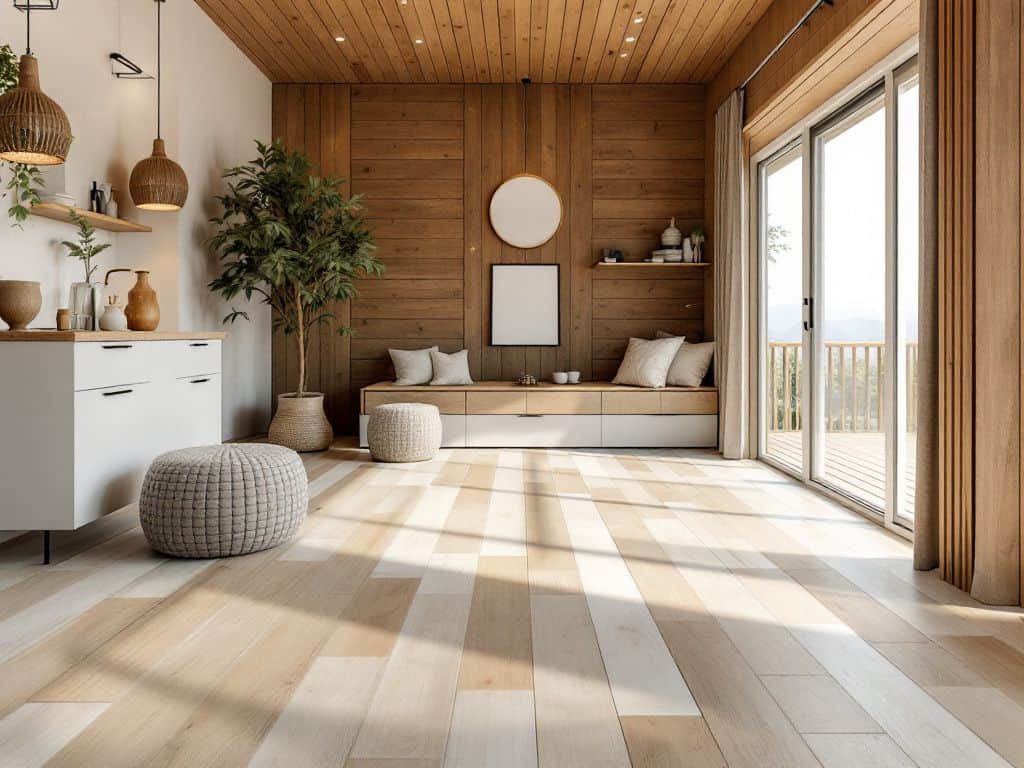
Color palettes in sustainable flooring are inspired by the tranquility of nature, favoring soft browns, sand, honey, smoky hues, and subtle greige. Oak remains a sought-after look, but designers now embrace lighter, neutral shades to create peaceful, welcoming spaces. This preference for earthy, organic tones helps homeowners achieve a sense of calm in their interiors, tapping into the broader wellness trend in home design.
According to Architectural Digest, these natural colors are expected to remain popular as they complement both traditional and contemporary decor styles while emphasizing comfort and sustainability.
Textured and Geometric Patterns
The tactile appeal of flooring is soaring in popularity. Surfaces with authentic grains, hand-scraped finishes, or stone-like impressions provide depth and interest, adding tactile dimension to any room. Meanwhile, geometric arrangements such as chevron, herringbone, and parquet introduce drama and a timeless element to living rooms and foyers. These patterns create visual intrigue, proving you don’t need to sacrifice personality for eco-consciousness.
Technological Advancements
Technology is revolutionizing modern flooring. Water-resistant laminate products now stand up to moisture and the demands of busy households. Click-lock vinyl planks offer simpler installation, increased sound absorption, and superior comfort underfoot. These technological leaps allow homeowners to select floors that are functional, stylish, and long-lasting, qualities essential in both active families and high-traffic commercial environments. The latest innovations also focus on easy cleaning and minimal maintenance, which further enhances sustainability efforts by extending product lifespans and reducing chemical use.
Health-Focused Designs
Supporting wellness in the home is another critical trend. Materials free of harsh chemicals or emissions, such as Talcusan-based flooring (primarily chalk and silicates), offer antibacterial and hypoallergenic properties. These floors are safe for children, pets, and anyone with sensitivities, helping create a home environment that supports health as much as aesthetics. The move toward non-toxic, emission-free flooring aligns with broader wellness design trends.
Acoustic Optimization
Reducing noise is now an important part of sustainable flooring design, particularly in urban homes and multi-family buildings. Advanced underlayment systems and acoustically engineered floors help minimize impact sounds, making homes quieter and more comfortable. These products are especially beneficial in families with children or pets and in work-from-home settings, where sound control supports both privacy and relaxation. Acoustic optimization is not only about luxury but is also becoming a standard expectation in modernized, eco-friendly living spaces.
Conclusion
Sustainability in flooring is reshaping interiors worldwide, combining innovative materials, technology, and design to offer products that are beautiful, durable, and environmentally sound. From rapid-growth bamboo to recycled and reclaimed surfaces and non-toxic health-focused options, today’s environmentally friendly floors add value, comfort, and peace of mind to any home. By prioritizing responsible materials and forward-thinking manufacturing, homeowners and industry leaders alike are driving a new era where style and sustainability go hand in hand.