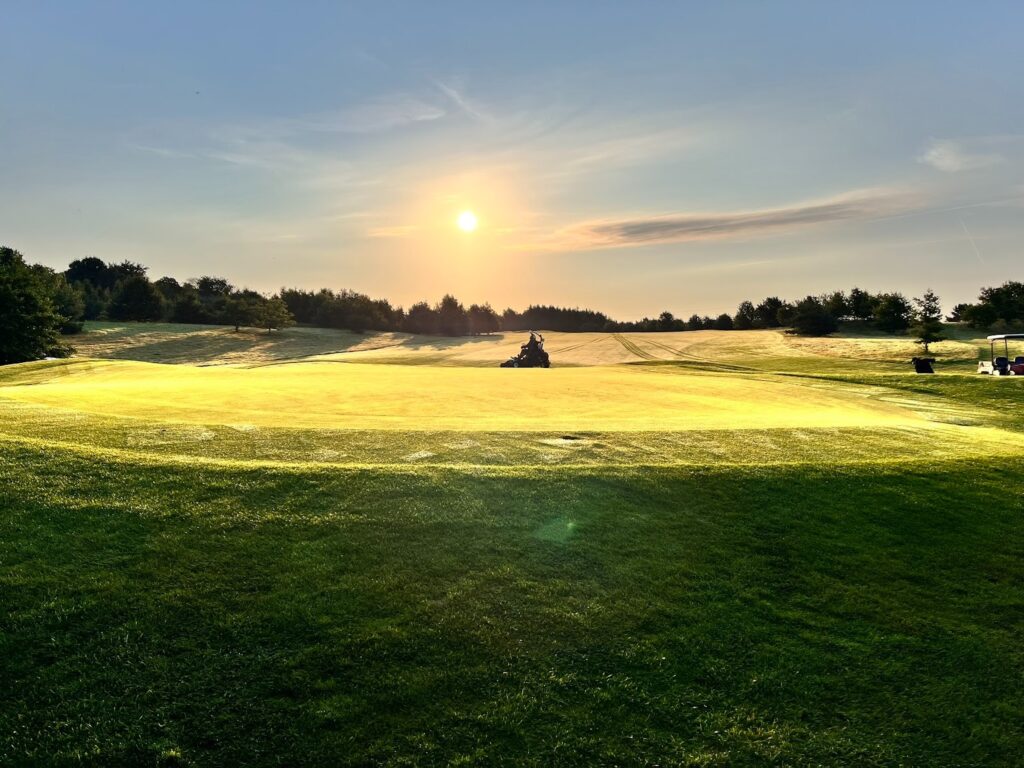
Most golfers who visit Copenhagen stick to the city’s more well-known courses. But 35 kilometers north, tucked into the countryside of Helsingør Municipality, sits a course that changed Danish golf forever.
Simon’s Golf Club opened in 1993. Founder Arne Simonsen, a shipping magnate, wanted to build something that could match the championship courses of Britain. He hired Martin Hawtree to design 27 holes and 10 years later, the course hosted Denmark’s first European Tour event.
The engineering here matters as much as the design. Denmark’s weather can be bad enough to shut down most courses, but an advanced drainage system keeps these greens and tees playable year-round. That’s rare. It means Simon’s never closes for long stretches like other Nordic courses do.
Greats like Ian Poulter and Colin Montgomerie have won on these fairways. But the course welcomes weekend players too. If you’re in Copenhagen, don’t overlook this beauty. Its history and playability make it bucket-list-worthy.
Martin Hawtree’s 27-Hole Design
When Arne Simonsen commissioned the British architect, he asked for a course that could challenge Europe’s best players but still be quite easily playable for club members. Hawtree delivered something unusual for Scandinavia: three distinct 9-hole loops that could be mixed and matched depending on the wind, specific tournament needs, or just for a bit of variety.
The A, B and C Loops
The A and B loops are the main championship combination, measuring 6,453 meters from the back tees with a par of 72. Both nines flow through similar terrain but offer different strategic puzzles. The C loop, which was added in 2007, stretches to 3,265 meters and holds its own as a championship-length nine.
Players can choose from six different 18-hole combinations:
- A+B
- B+C
- C+A
- 2x any single loop
Most visitors play A+B, which is exciting because it hosted the 2003 Nordic Open. The flexibility of this layout means the course never feels repetitive, even for members who play several times a week.
Playing Character: Open Parkland with Coastal Influences
Simon’s was made to be open parkland rather than traditional links, but the coastal location makes quite a big difference to how the course plays. Gently curvy fairways roll through rural countryside, framed by stretches of woodland that look beautiful, but deceivingly funnel wind on blustery days. The terrain climbs and falls just enough to add interest without being exhausting.
Strategic bunkering guards the greens, which tend to be on the large side with a fair bit of internal contouring. Hawtree used water selectively. The C-nine features more water hazards than the original loops, including carries that need careful club selection. Ladehøj Lake takes up most of the visual landscape around the clubhouse, appearing on several holes as both a scenic backdrop and a strategic threat if your game is less confident.
All-Season Nordic Golf
Most Scandinavian courses close for months during winter or become unplayable after heavy rain. Simon’s stays open except during snow cover or severe frost. The subsurface drainage system moves water off the greens and tees quickly enough that play can resume within a few hours of a storm.
Clubhouse Life, Hospitality and Stay & Play
Golf courses often treat their clubhouses as afterthoughts. But not Simon’s. The clubhouse sits at the meeting point of the 9th and 18th greens, and every window frames either Ladehøj Lake or the course. It’s designed to be a destination in itself.
English-Style Clubhouse and Albatross Bar
The Albatross Bar spreads across two floors with interiors that lean heavily into English golf tradition. High-backed leather chairs cluster around a fireplace on the ground level, giving it an upmarket but warm feeling. Upstairs, more private tables overlook the lake and finishing holes.
Lakeside Restaurant
Lakeside Restaurant operates separately from the bar, offering full dining with terrace seating when weather permits. The menu is nicely balanced between Danish and international dishes, scaled for both quick post-round meals and longer celebrations.
Off-Course Comforts
The pro shop stocks equipment and apparel, and Head Golf Professional James Petts is available for lessons.
Spacious changing rooms feature full shower facilities and a dedicated bag storage and drying room handles wet weather gear so you don’t have to worry about going home with damp clothing. A VIP room adds bath and sauna facilities for members and special events.
Hotel Nybogaard and Corporate Golf Days
Hotel Nybogaard sits right by the 1st green, in historic buildings that date back to 1688. The 36-room property has a “manor house” character while offering modern amenities. Guests can walk directly onto the course, which is one of the things golfers love about this place.
Corporate golf days are a major part of Simon’s business model. Companies can book packages combining meetings, championship golf and dining at Lakeside Restaurant or the hotel’s banquet facilities.
Planning Your Round at Simon’s
Simon’s Golf Club welcomes visitors but keeps high standards that protect the course and pace of play. Understanding the access rules and local expectations helps ensure a smooth experience.
Visitor Access and Practicalities
Weekdays are the most straightforward access for visitors. You can book tee times in advance by contacting the pro shop directly. Proof of handicap and club membership are mandatory (maximum 25 for junior golfers, men and women, though Hotel Nybogaard guests receive a slight concession at 30).
Weekend play is limited for guests. You need to either be a guest at the hotel, or have a member join you for your round. This policy keeps weekend play manageable for members while still allowing serious golfers who’ve booked accommodation to experience the course.
Players generally walk at Simon’s, following the Nordic tradition of treating golf as both sport and exercise, but golf carts are available for hire if needed. Soft spikes are mandatory regardless of the conditions.
Training and Practice
There’s a driving range, chipping green, putting green and 3-hole course for training something specific or warming up. If you’re a guest, you’ll get golf balls for the range built into your green fees.
There’s also a well kitted-out Indoor Training Center, but it’s only available to members. Guests can’t access it even with a member, so if you’re here often, consider becoming a member to enjoy this special perk.
When to Go and What Else to See
Simon’s drainage system makes it playable nearly year-round, but late spring through early autumn is the best combination of weather and course conditions. May and September have fewer crowds than peak summer and you’ll still get long daylight hours and comfortable temperatures.
Don’t miss some of the other exciting attractions nearby. Fredensborg Palace, the Danish royal family’s summer residence, sits close enough for an afternoon visit. The Louisiana Museum of Modern Art is well worth a visit for anyone interested in artwork and architecture.
Kronborg Castle, the actual setting of Elsinore in Shakespeare’s Hamlet, overlooks the sound between Denmark and Sweden. Sandy beaches stretch along the coast, giving you some pretty walking routes when you need a break from golf.
Why Simon’s Belongs on Your Scandinavian Golf List
Championship courses can intimidate casual players, but Simon’s avoids that through its “build-your-own-course” structure, which allows players to match their round to their ability. The 27-hole layout means six different combinations, giving you several days of golf from one base while balancing rounds with the cultural richness and natural beauty that define this corner of Denmark.
Simon’s fits naturally into a broader Scandinavian golf itinerary. Pair it with Royal Copenhagen or build a Nordic loop including Sweden’s coastal courses.
About the Author
Jordan Fuller is a retired golfer and businessman. When he’s not on the course working on his own game or mentoring young golfers, he writes in-depth articles for his website, Golf Influence.