
Key Takeaways
- Modern privacy solutions are elevating both patient confidentiality and hygiene standards in healthcare.
- Innovations such as smart glass and advanced privacy screens are reshaping healthcare interiors to create safer, cleaner environments.
- Integrating these solutions supports better patient outcomes and helps facilities adhere to strict regulatory requirements.
Maintaining privacy alongside strict hygiene is of utmost importance in medical facilities. Technological advancements continue to deliver sophisticated solutions designed to enhance both confidentiality and cleanliness for patients and staff. One of the fast-evolving segments in this domain is physical and digital privacy systems that also address the risk of cross-contamination. Healthcare decision-makers are turning to options like sanitized privacy screens and adaptable barriers to uphold these dual commitments.
In modern medical environments where multiple care teams interact in shared spaces, innovation centers on transitional, adaptable privacy tools. New products such as advanced privacy screens and smart glass walls make it easier to address the fluctuating need for both openness and seclusion in clinical settings. Brands focusing on adaptable, hygienic solutions, such as PRVC Systems, are paving the way for more effective, patient-friendly healthcare environments.
Providers must balance protecting sensitive data, patient modesty, and public health. Strategic planning regarding privacy setup has a direct impact on both compliance and operational efficiency. As the industry responds to heightened awareness about infection control, there is greater emphasis on materials and designs that support rigorous cleaning protocols without compromising confidentiality or comfort.
Advancements in Privacy Screen Protectors
Healthcare facilities are embracing innovative privacy screen protectors to safeguard sensitive digital information. These screen solutions have a restricted viewing angle, shielding electronic medical records and patient charts from unauthorized eyes. In addition to supporting data privacy, new privacy screen protectors are constructed to endure repeated cleaning with strong disinfectants, making them suitable for high-touch environments. They help address HIPAA compliance challenges while withstanding rigorous hygiene standards. As highlighted by Medical Economics, these advancements bridge the gap between data security and daily clinical workflow requirements.
Smart Glass Technology in Healthcare
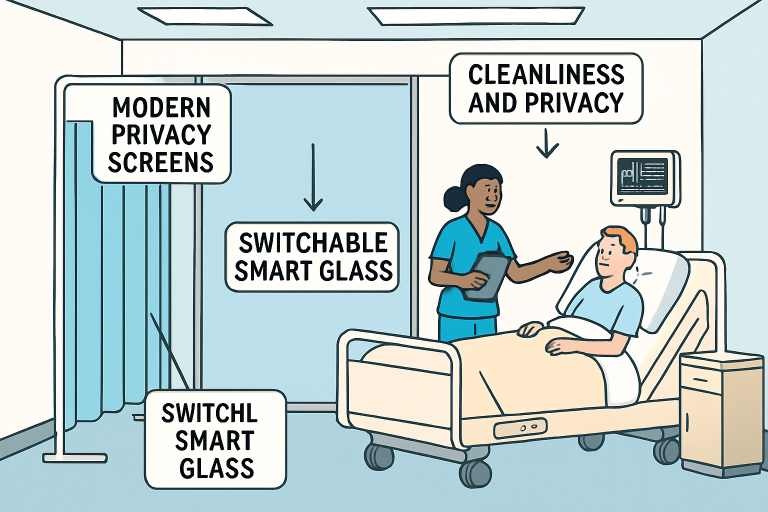
Smart glass is transforming healthcare interiors by allowing operators to instantly switch glass panels from transparent to opaque, providing privacy on demand. This technology is particularly advantageous in consultation rooms, ICU bays, and observation areas where privacy needs can change rapidly. Smart glass not only supports confidentiality but is also extremely low-maintenance compared to fabric curtains, dramatically minimizing sources of infection. Its easy-to-clean surface helps achieve higher levels of infection prevention, in line with lessons learned during recent pandemics. Facilities like St. Mary’s Hospital in London exemplify the integration of smart glass for improved safety and efficiency.
Innovative Privacy Screens
The latest privacy screens have moved far beyond the simple folding partitions of previous generations. Options such as modular, height-adjustable, and wheeled screens make rapid configuration possible to suit individual patient preferences and operational needs. New materials, like antimicrobial plastics and seamless composites, have been engineered for maximum durability and ease of cleaning. Products like Silentia’s folding screens are lauded for both their customization and integration into standardized cleaning workflows, thus enhancing patient safety while providing visual comfort.
Integrating Privacy Solutions into Healthcare Design
The contemporary approach to patient care design acknowledges the importance of daylight, open spaces, and residential-style aesthetics. Integrating privacy technology, such as switchable glass and modular screens, creates healing environments that do not sacrifice comfort for compliance. Architects are working closely with infection prevention experts to specify materials and spatial layouts that minimize the spread of pathogens while maintaining pleasant, human-centered spaces. These innovations reflect a comprehensive approach that supports patient dignity and safety at every stage from emergency care to long-term rehabilitation. Thoughtful installation of privacy solutions boosts patient morale and accelerates recovery.
Benefits of Modern Privacy Solutions
- Enhanced Patient Confidentiality: Physical and digital privacy tools ensure sensitive data and consultations remain protected.
- Improved Hygiene: Materials such as antimicrobial screens and easy-clean glass meet infection-control requirements, reducing contamination points.
- Regulatory Compliance: Facilities adopting these innovations more easily maintain compliance with HIPAA and similar standards, reducing risk.
- Patient Comfort: Customizable, visually pleasing solutions foster a welcoming environment, supporting emotional well-being and dignity.
Challenges and Considerations
Deploying advanced privacy solutions often entails higher upfront investment and training for clinical staff. Facilities must evaluate the compatibility of new technologies with existing infrastructure, particularly when integrating connected devices or smart technologies. Some solutions may require ongoing maintenance or entail steep learning curves for users. As healthcare environments become more technologically complex, consistent evaluation and feedback from frontline staff will be crucial to ensure that privacy innovations truly support efficiency, compliance, and superior patient care.
Final Thoughts
The healthcare sector is progressing rapidly toward spaces that are not only safe but also dignified and reassuring for patients. The fusion of privacy and hygiene innovation, as seen in technologies such as privacy screen protectors, smart glass, and modern folding panels, is central to this transformation. By investing in these solutions, healthcare organizations enforce standards, enhance comfort, and deliver the high level of confidentiality that today’s patients and families expect.