Key Takeaways
- Training stays can build useful skills, but short daily practice helps those skills last.
- Clear routines and consistent household rules reduce confusion for dogs.
- Dogs learn best when owners gradually increase distractions.
- Management tools, including leashes, gates, and supervision, prevent mistakes while habits grow.
- Stress, pain, illness, and fear can affect behavior and should not be ignored.
A training stay can give a dog a strong starting point, but reliable behavior is built through everyday repetition at home. Whether your dog has completed a Board and Train Denver program or another structured course, the transition back to family life is where new skills are tested and strengthened.
Home has more distractions than a training setting. There are familiar sofas, doorbells, children, visitors, meals, toys, neighborhood dogs, and changing schedules. The goal is not perfection on day one. It is helping your dog understand that the same calm choices and clear expectations apply wherever life happens.
Why The First Weeks At Home Matter
The return home is a major adjustment. A dog may have experienced predictable meals, rest periods, walks, and practice sessions during training. At home, those expectations must be translated into a busier, more personal environment.
Keep the first several days calm. Set up a quiet sleeping area, follow a predictable feeding and bathroom schedule, limit visitors when possible, and use the same cues taught during training. Avoid immediately testing your dog in crowded stores, long social events, or highly stimulating outings.
Build One Clear Home Routine
Dogs benefit from knowing what generally comes next. A routine does not need to happen at the same time every day, but meals, potty breaks, rest, exercise, enrichment, and practice should follow a familiar pattern. The American Kennel Club’s guidance on dog routines explains how consistency can support confidence, training, grooming, and day-to-day behavior.
A flexible daily framework might include:
- A morning bathroom break followed by a brief practice session.
- Breakfast, then quiet rest.
- A leashed walk, sniffing opportunity, or supervised enrichment activity.
- A short midday session focused on one useful skill.
- A calm evening activity, final bathroom break, and bedtime routine.
Practice Skills In Small Pieces
Do not try to run through every command in one long session. Five-minute practice blocks are usually more useful than tiring drills. Choose one or two skills, reward correct responses promptly, and stop after a clear success.
- Recall from one room to another.
- Waiting calmly at a door or gate.
- Walking beside you for a short stretch of sidewalk.
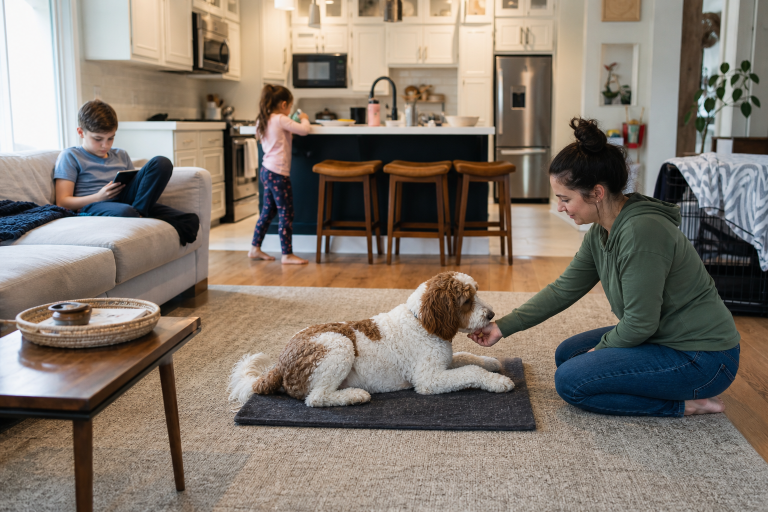
- Settling on a mat while people move around.
- Leaving dropped food, toys, or household items alone.
Help Dogs Generalize Their Skills
A dog that responds beautifully in the kitchen may struggle near a busy street. Dogs do not automatically understand that “sit,” “stay,” or “come” means the same thing in every place and around every distraction. Build reliability one layer at a time.
- Practice in a quiet room.
- Move to other rooms in the home.
- Practice in the yard, driveway, or hallway.
- Visit a calm outdoor location.
- Add mild distractions at a safe distance.
- Increase duration, distance, or activity only when your dog is ready.
If your dog struggles, lower the difficulty instead of repeating the cue louder. More distance from a distraction, a shorter stay, or a quieter location can help your dog succeed without added pressure.
Keep Family Rules Consistent
Mixed messages slow learning. If one person allows jumping, pulling, or feeding from the table while another discourages it, the dog receives unclear information. Agree on cue words, furniture rules, greeting expectations, door safety, and how everyone will respond to mistakes.
For example, if calm greetings are the goal, every family member should wait for four paws on the floor before offering attention. Consistency makes the desired behavior worthwhile for the dog.
Use Rewards, Management, And Enrichment
Rewards can include treats, praise, toys, a game, access to the yard, or permission to sniff on a walk. Deliver them close to the behavior you want repeated. If a dog chews a shoe while alone, scolding later will not explain the correct choice. Instead, prevent rehearsal by storing tempting items, using gates or a crate appropriately, and providing safe chew options.
Training also works best when a dog’s daily needs are met. Offer suitable exercise, sniffing walks, food puzzles, scatter feeding, brief tug or fetch games, scent activities, and quiet chewing time. More activity is not always better. Many dogs also need help learning how to settle and rest.
Watch For Stress Signals
Stress can appear before barking, lunging, snapping, or escape behavior. Watch for lip licking, yawning, turning away, pacing, panting, tucked posture, sudden stillness, hiding, or repeated attempts to leave. These signals are information that the situation may be too difficult.
Create distance, reduce noise, end the interaction, or give your dog a quiet recovery period. Sudden behavioral changes, reluctance to move, irritability, or unusual sensitivity to touch can also be associated with discomfort. Cornell University’s resource on recognizing pain in dogs is a helpful reminder that behavior changes deserve careful attention.
Handle Setbacks Without Starting Over
Setbacks are normal during storms, travel, visitors, illness, moves, or schedule changes. Identify what changed, return to an easier version of the skill, reward calm choices, and build difficulty again gradually. A dog that pulls near a busy park may need successful walks farther away before moving closer.
Create A Simple Progress Tracker
Keep brief notes after practice. Record the skill, location, distraction level, response, reward used, and any signs of fatigue or stress. Progress may mean fewer reminders, faster recovery after excitement, calmer greetings, or better focus. Small improvements matter.
When Follow-Up Help Makes Sense
Seek qualified support for repeated lunging, biting, severe fear, resource guarding, separation-related distress, escape behavior, or lack of progress despite consistent practice. A veterinarian should evaluate sudden changes and help rule out pain or illness. Ask training professionals how to practice at home, what safety measures are needed, and how progress will be measured.
Common Questions About Training After A Stay
How Much Should Owners Practice Each Day?
Several short sessions are usually more effective than one long drill. Adjust practice to your dog’s age, health, attention span, and goals.
Why Does My Dog Listen In One Place But Not Another?
Different locations add distractions, distance, and emotional pressure. Practice skills gradually in multiple safe settings.
Can Training Replace Daily Management?
No. Training and management work together. Secure doors, leashes, supervision, gates, and safe routines prevent problems while reliable habits develop.
Conclusion
A training stay is a beginning, not a finish line. Calm routines, short practice sessions, shared family rules, appropriate enrichment, and attention to stress can help new skills become dependable at home and in the real world. Treat training as an ongoing part of daily life, and your dog will be more likely to make safe, confident choices wherever you go.