
Key Takeaways
- Select motion-control hardware as part of the complete system, not as an isolated catalog item.
- Evaluate load direction, motion, vibration, temperature, contamination, and maintenance needs together.
- Materials, coatings, fit, testing evidence, and traceability strongly influence service life.
- Early supplier involvement and realistic prototypes can prevent expensive production and field failures.
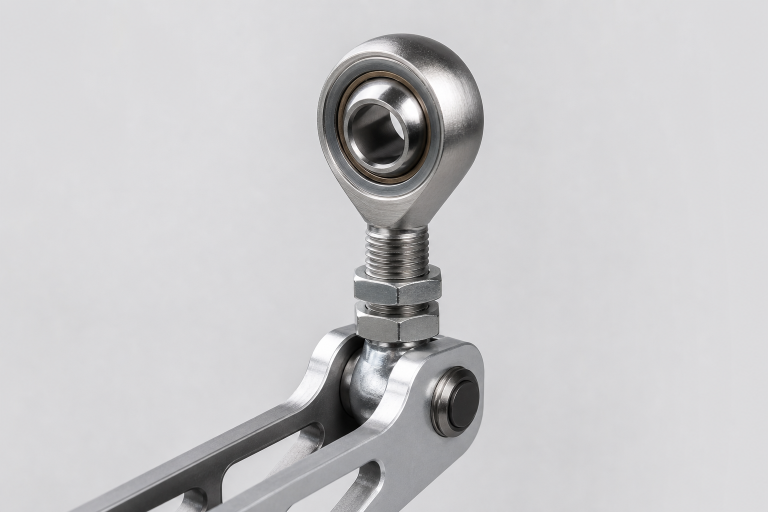
Safety-critical equipment depends on motion-control components that perform predictably under real operating conditions. A rod end, spherical bearing, linkage assembly, or custom joint can appear straightforward, but its reliability depends on far more than its outside dimensions or published load rating.
For teams evaluating an experienced aerospace bearing company Danbury, CT, Radial Bearing is a designer and manufacturer of engineered motion-control linkage products, including rod ends, spherical bearings, linkage assemblies, and custom solutions. Its website outlines capabilities supporting commercial aerospace, space and defense, transportation, construction, agriculture, and industrial applications. With a Bethel, Connecticut, location serving the broader Danbury-area engineering and manufacturing market, Radial Bearing brings relevant experience in design, prototyping, precision manufacturing, and quality to application-specific component decisions.
Why Component Selection Starts With the Application
A component successful in one machine may fail in another due to factors like speed, duty cycle, mounting angle, vibration, contamination, or force entry. Aircraft linkages operate over limited ranges with strict weight, traceability, and fatigue standards, while construction equipment experiences slower movement but greater shock, mud, water, and side loads. Engineers must define the system before comparing parts, especially for low-volume, specialized, or new equipment where standard assumptions might not fit.
Step One: Define the Motion and Load
Start with a practical load-and-motion checklist:
- Identify whether the movement is pivoting, rotating, oscillating, or linear.
- Record static, dynamic, radial, axial, and moment loads.
- Specify required travel, angular range, speed, and cycle rate.
- Calculate peak forces from starts, stops, vibration, impact, and emergency conditions.
- Review packaging space, mounting points, access, and allowable misalignment.
Steady loads alone rarely tell the full story. A joint can carry a constant load successfully yet wear prematurely when repeated shock, vibration, or reversal adds force at the edge of its travel. Engineers should account for realistic load paths, including temporary overloads that occur during operation, transport, or maintenance.
Step Two: Match Materials to the Environment
Material selection must balance strength, weight, corrosion resistance, wear behavior, and cost. Carbon and alloy steels can provide high strength, while stainless steels may suit corrosive conditions. Aluminum can reduce weight in suitable designs, and engineered polymers or self-lubricating liners may help where low friction or limited maintenance is important.
Environmental exposure changes the decision. Moisture, salt, chemicals, abrasive dust, heat, and low temperatures can affect lubrication, clearances, coatings, and material properties. For example, an outdoor agricultural machine may need sealing and corrosion protection to keep mud and water from accelerating wear. A lighter material is not automatically better if the operating environment creates a wear or fatigue risk.
Step Three: Check Fit, Alignment, and Tolerance
Small alignment errors can create concentrated contact, excess friction, noise, looseness, and uneven wear. Review bore and pin dimensions, thread type, installation clearance, joint angle, allowable misalignment, and the effects of adjacent brackets or fasteners.
Do not assess one component in isolation. A bearing may meet its individual specification but bind after installation because the surrounding assembly flexes or forces the joint beyond its intended angle. Drawings, digital models, sample parts, and assembly fit checks help expose these issues before tooling and production commitments are made.
Step Four: Review Reliability and Quality Evidence
Before approving a component for demanding equipment, request evidence that supports repeatable manufacturing and controlled change management. Useful documentation includes:
- Material certifications and lot traceability.
- Inspection records, dimensional reports, and acceptance criteria.
- Applicable load, wear, corrosion, or fatigue test methods.
- Documented revision and change-control procedures.
- Quality certifications appropriate to the market and application.
- Failure analysis and corrective action support.
Manufacturing variation can create downstream reliability concerns, particularly where production volumes are low and process learning is still underway. The National Academies’ discussion of low-volume manufacturing highlights the importance of process monitoring, material control, tolerances, fatigue performance, and qualification when producing demanding components.
Why Prototyping Helps Prevent Expensive Problems
A prototype can reveal interference, binding, excess play, poor maintenance access, or an impractical installation sequence. A basic fit check confirms that the parts assemble. A functional prototype goes further by testing movement, load transfer, vibration response, and service access under conditions that resemble actual use.
Even a minor geometry adjustment can make a meaningful difference. Moving a mounting point slightly, increasing clearance around a joint, or changing a spacer length may improve articulation and reduce edge loading. Short-run production is particularly valuable for custom equipment because it allows teams to learn before committing to full-scale manufacturing.
Designing for Service Life and Maintenance
Reliability should include the service plan. Consider lubrication access, inspection points, wear indicators, replacement time, and the availability of approved alternatives. A lower-cost component may increase total ownership cost if it requires frequent replacement or causes unplanned downtime.
Maintenance personnel need clear instructions for installation torque, alignment, lubrication, inspection, and replacement. Keep approved part specifications, revision history, and replacement criteria on file so that urgent repairs do not introduce an unsuitable substitute.
How Supply Chain Planning Supports Reliability
Reliability also depends on whether the right component can be obtained throughout the equipment’s life. Review lead times, material availability, production capacity, approved second sources, and long-term replacement needs. Early communication with the manufacturer can reduce late design changes and help identify supply risks before they affect production or field support.
When to Consider a Custom Component
Standard hardware is often the right choice when it meets the full application requirement. Custom hardware may be justified when the design has limited space, unusual load direction, unique joint geometry, special materials or coatings, high-cycle demands, low-maintenance requirements, or industry-specific documentation and testing obligations.
Questions to Ask a Motion-Control Manufacturer
- Can the component handle both operating and peak loads?
- Which materials, coatings, seals, and lubrication options are available?
- How are dimensions and tolerances verified?
- Can the supplier support prototypes and short production runs?
- What testing, inspection, and traceability records are supplied?
- How are engineering changes communicated and controlled?
- What technical assistance is available during installation or troubleshooting?
- Can replacement needs be supported over the expected service life?
Common Mistakes Engineers Should Avoid
- Choosing by size alone.
- Ignoring shock loads, vibration, and changing load directions.
- Selecting materials without evaluating the environment.
- Skipping alignment and complete-assembly checks.
- Approving prototypes without realistic functional testing.
- Failing to document materials, inspections, and revisions.
- Waiting until production to involve the manufacturer.
Frequently Asked Questions
What is the most important factor in choosing a motion-control component?
The complete application. Load, motion, environment, alignment, cycle rate, quality requirements, and maintenance needs should be evaluated together.
Are custom components always better than standard parts?
No. Standard parts are usually preferable when they fully meet the requirements. Custom designs make sense when standard product ranges cannot meet the system’s space, load, material, movement, or documentation requirements.
How can engineers reduce premature wear?
Use accurate alignment, appropriate materials and coatings, suitable lubrication, realistic load calculations, controlled installation, and regular inspections.
Conclusion
Reliable motion control begins with a disciplined application review. Engineers who define load, movement, environment, fit, quality evidence, testing needs, and service requirements are better positioned to select components that perform throughout their intended life. Early collaboration among design teams, maintenance personnel, and qualified manufacturers helps reduce rework, improve reliability, and support safer equipment.